
Handmade Pottery: How Burleigh Is Made
At Burleigh we use traditional skills and techniques, the highest-quality raw materials and our dedicated team of craftsmen to create our classic and timeless tableware.
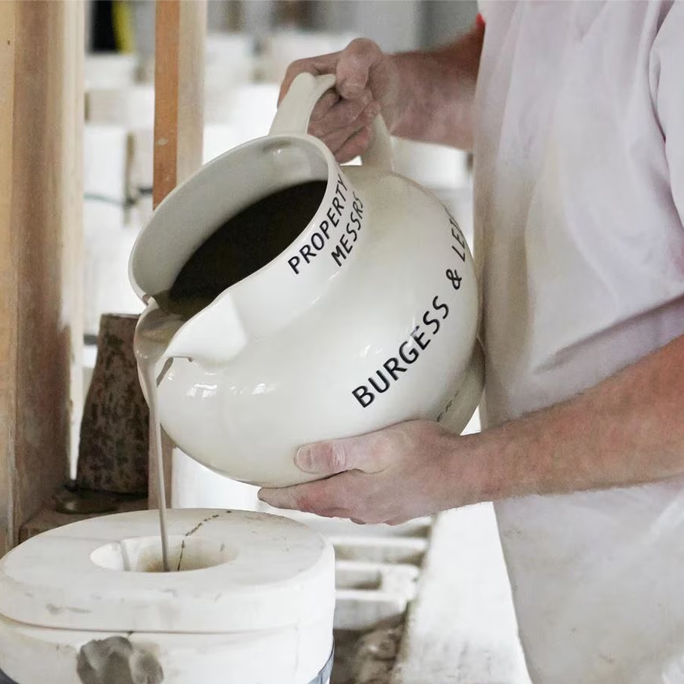
The first step of our craft is to process the clay from raw ingredients, using original 19th century machinery, to make malleable ‘plastic’ clay and liquid clay called ‘slip’. The malleable clay can then be pressed into shape to make flatware items, such as plates and bowls. The liquid clay is poured into plaster moulds to form more complex ‘holloware’ shapes, such as teapots. Next, the dried clay is carefully sponged and fettled to smooth over the surface.
Burleighware is fired three times - the first firing of our pottery is called the biscuit firing. At Burleigh, we use gas kilns and fire at temperatures of over 1000 degrees. After firing, the pieces are taken to our specialist biscuit selectors who inspect and brush the pottery to prepare it for decorating.
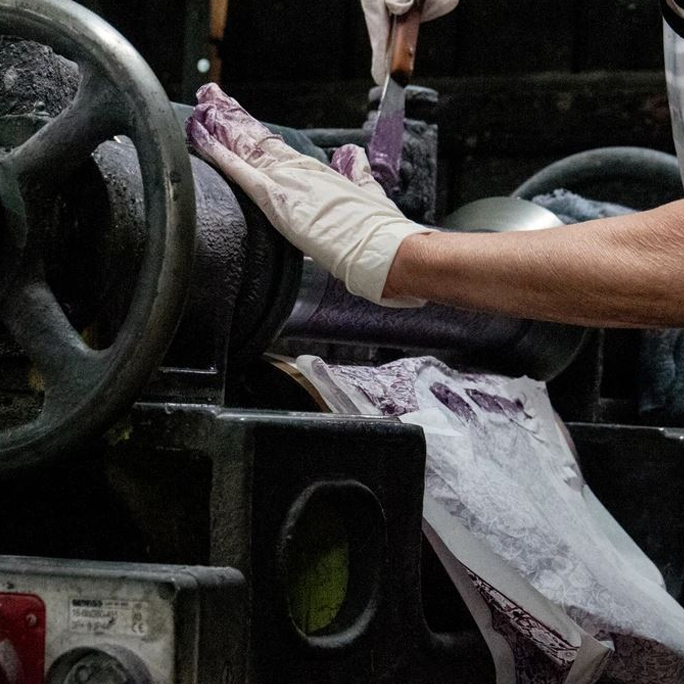
Our pottery has been hand decorated in the same way for 200 years, using the skilled technique of tissue transfer printing. We are the last pottery in the world to use this traditional practice, which forms an entirely unique and beautiful finish, attainable only to Burleigh. This intricate decorating process begins with printing from an engraved copper roller onto very fine tissue paper. The paper rolls off the printing machine in continuous sheets, which are ripped to size by our highly skilled printer. She then hangs each print on a line and sends it down the room to waiting transferrers. Each transferrer then expertly hand cuts each design to size and places onto biscuitware shapes.
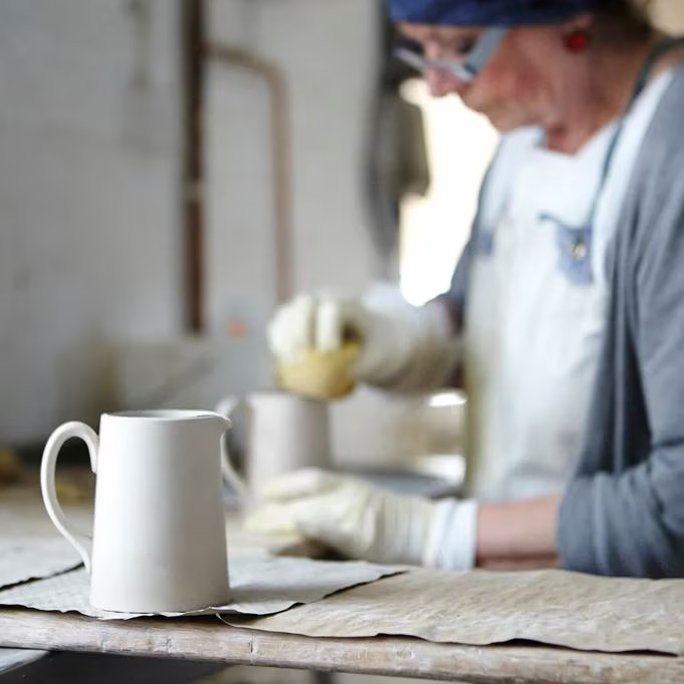
Once the design is applied, it is rubbed in to place with a brush and soft soap; transferring the elegant Burleigh pattern from the tissue to the pottery. The tissue paper is then washed away to leave only the printed design on the pottery and, in order to ensure the quality of our Burleighware, the piece is then fired for a second time. Finally, the shape is coated in glaze and fired for a third time, bringing out the rich tonal colors in our patterns and providing a smooth glossy finish to the surface.
Our wares are handmade in England using these traditional techniques to give them a unique subtlety and individuality that modern methods lack.